A Table Setting for a Long, Unhurried Meal
A table setting for a long, unhurried meal leaves room for serving, conversation, and a few thoughtful accents without crowding the occasion.
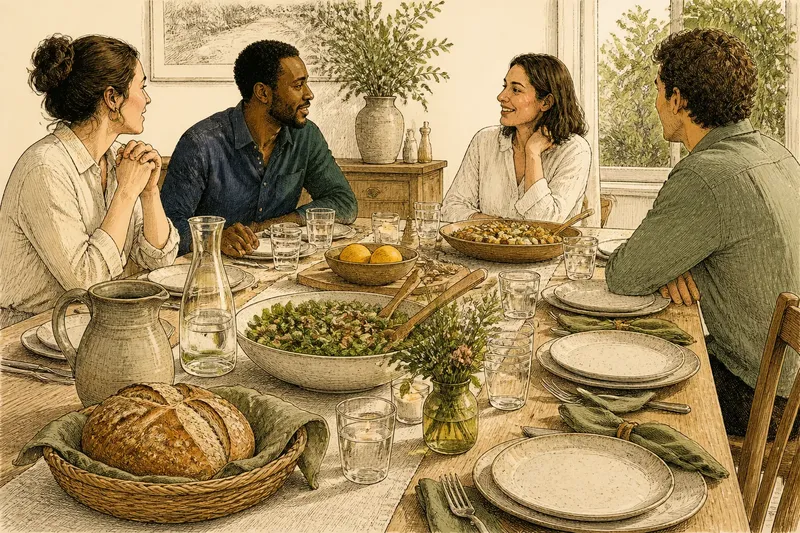
The most common mistake in a table setting for a long, unhurried meal is arranging every attractive object before checking whether anyone can pass a bowl. The cost is small but immediate: guests reach across one another, plates have nowhere to land, and the table feels more like a display than a place to stay.
Start with the meal
Let the occasion decide what belongs on the table. A lunch built around shared salad and bread needs reachable serving dishes; a dinner with courses brought from the kitchen needs clear space for each plate. Begin with the food and the way it will arrive, not with a centerpiece.
Make a quick list of what will be served, then note which items need to sit on the table at the same time. A platter for a shared main dish, a bread basket, and a water carafe have different jobs. If the meal is served in courses, the empty space between them is useful, not unfinished.
Imagine hosting a relaxed supper with a large salad, warm bread, and a dish carried in from the kitchen. You might place the salad and bread near the middle, leave a clear landing area beside them, and bring the main dish out later. The observable result should be that guests can serve themselves without moving the centerpiece or stacking objects in their laps.
Keep serving paths open
Think of the table like a shared countertop: the working surface matters as much as the things displayed on it. Keep the center low and compact, with serving dishes arranged so guests can reach them without leaning over a vase or candle. A narrow runner can suggest a visual centerline, but it should not dictate where every bowl must go.
Before guests arrive, set out the serving pieces and place settings together. Check whether a serving spoon has room to rest, whether a platter can be lifted without catching a glass, and whether each person has space to set down a fork. These small clearances matter more over a long meal, when dishes move and conversation pauses for serving.
If the table is narrow, use the ends for items that are not needed by everyone at once, such as extra napkins or a spare bottle of water. Keep frequently shared food within comfortable reach. A crowded center can be relieved by serving one item from the kitchen instead of trying to fit everything onto the table at once.
Make conversation easy
Conversation depends partly on what blocks a guest’s view. Choose a centerpiece low enough that people can see across it while seated. A shallow bowl of citrus, a small branch in a short vessel, or a few flowers in a low jar can mark the occasion without creating a visual wall.
Consider the sound and movement of the setting, too. A hard, bare table may make cutlery and glasses feel conspicuous; a cloth napkin or woven runner can soften the surface without requiring a fully dressed table. Avoid placing delicate objects where sleeves, serving arms, or passing dishes are likely to brush them.
Seating also shapes the pace. Leave an easy route to the table and avoid making a guest squeeze past a chair to sit down. If people will serve themselves, arrange the places so the first person reaching for a shared dish does not block everyone else. For a small gathering, a little asymmetry can feel more relaxed than forcing each object into a rigid mirrored position.
Choose accents with purpose
A restrained table is not an empty one. Pick a few accents that connect to the occasion: linen napkins for a leisurely meal, a simple candle for an evening gathering, or seasonal produce that will later be eaten. Repeating one color in napkins and flowers can make the arrangement feel considered without adding another decorative object.
Let useful objects carry some of the visual interest. A ceramic water jug, a wooden serving board, or a glass bowl can be both practical and pleasing to look at. Mix materials with a light hand, and leave enough plain surface visible for the table to breathe. The aim is not to match every piece, but to avoid making every piece compete.
Light should support the meal rather than turn the table into a stage. During the day, keep the arrangement clear of the strongest glare if it makes guests squint or obscures the food. In the evening, place candles where they illuminate faces and food without crowding serving paths. If children or pets will be nearby, choose a safer, stable alternative to an open flame.
What should stay on the table?
How much space should serving dishes take?
Keep only the dishes guests will use during that part of the meal on the table. Extra food can wait nearby or come out in a later course, leaving room for plates, glasses, and the movement of serving.
Does every place need the same setting?
Each guest should have the utensils and glassware needed for the meal, but the arrangement need not look mechanically identical. If one place sits beside a shared platter or a wall, adjust for comfort rather than preserving symmetry.
What makes a good centerpiece?
A good centerpiece stays low, stable, and out of the way. Choose something that suits the occasion and can be moved easily if the food needs the space.
How can a table feel special without looking formal?
Use one or two deliberate touches, such as cloth napkins and a small seasonal arrangement, while keeping the serving pieces practical. Familiar plates and glasses can feel welcoming when the table has room for people to settle in.
Let the meal change
A long gathering is not a static scene. The bread basket empties, a platter moves, and someone may pull their chair closer to hear a story. Leave a place for those ordinary changes rather than arranging the table so precisely that every adjustment feels like a disruption.
Before sitting down, look at the table from a guest’s chair. Can you see the people opposite you? Is there a clear place for the next dish? Can someone reach water without asking another guest to move? This final view helps tune the setting to the occasion, not to a photograph.
A table setting for a long, unhurried meal succeeds when it supports the gathering quietly. Keep the food accessible, the sightlines open, and the accents few enough that people—not the arrangement—hold the room’s attention.